Stargazing in Samothraki
Adventure & Outdoors
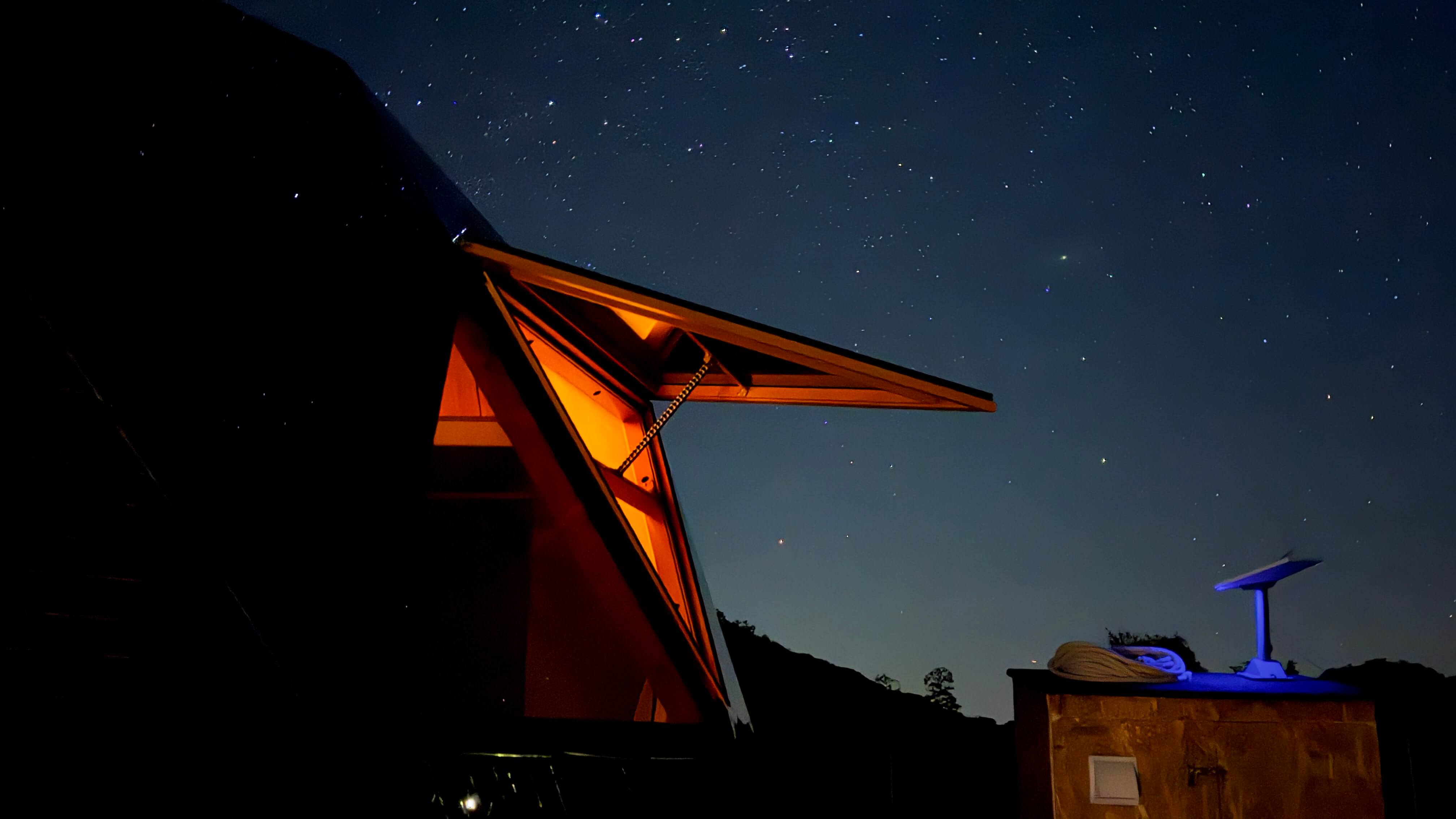
Samothraki has some of the darkest skies in the Aegean. Where to stargaze, when to go, and the island's ancient connection to the night sky.
- Adventure & Outdoors
Stargazing in Samothraki: One of the Darkest Skies in the Aegean
Most people come to Samothraki for the waterfalls, the mountain, or the Sanctuary. They tend to leave talking about the sky.
On a clear, moonless night here, the Milky Way is visible to the naked eye — not the faint smudge most of us know from the edge of a town, but a band of light running the length of the sky with visible structure in it. For a great many visitors it is the first genuinely dark sky they have ever stood under, and it lands harder than anything they saw in daylight.
Why Samothraki Is So Good for Stargazing
Three things come together here, and it is rare to get all three in one place.
Almost nothing on the island makes light. Samothraki has no cities, no motorways, no airport, and a permanent population under three thousand. There is no resort development and no industry. Nothing here produces the dome of orange haze that sits over most inhabited coastlines.
It stands alone in open sea. The island sits well out in the north Aegean, away from the mainland's coastal strip. Light travels a long way over water, so distance from populated shores matters as much as local darkness — and Samothraki has that distance in almost every direction.
The mountain shields the rest. Mount Saos runs the island's spine and rises to 1,611 metres. Depending where you stand, it blocks whatever glow reaches the horizon from the mainland, leaving the darkest half of the sky genuinely dark.
The Island Has Always Watched the Sky
This is not a modern discovery. Samothraki's relationship with the night sky runs through its mythology and its history.
The summit is called Fengari — moon in Greek — a name that replaced the older Saos. Locals explain it two ways: that during a full moon the moon appears to rest directly on the peak, or that the mountain stands tall enough to hide it entirely. Tradition holds that a wish made at the summit under a full moon comes true.
Homer put Poseidon on that summit in the Iliad, watching the Trojan War from the island's highest point. The shores of Troy really are visible across the water to the east on a clear day.
In antiquity the mountain's height made it a navigation landmark for sailors crossing the northern Aegean — a fixed point to steer by, read against the stars.
And the Sanctuary of the Great Gods at Palaiopoli drew initiates from across the Mediterranean for mystery rites conducted largely after dark. Whatever happened in those ceremonies, the participants were doing it under this same sky.
For more on the myths the ancients read into these constellations, see Astromythology of Samothrace.
The Best Stargazing Spots in Samothraki
1. Kipos Beach — the darkest horizon
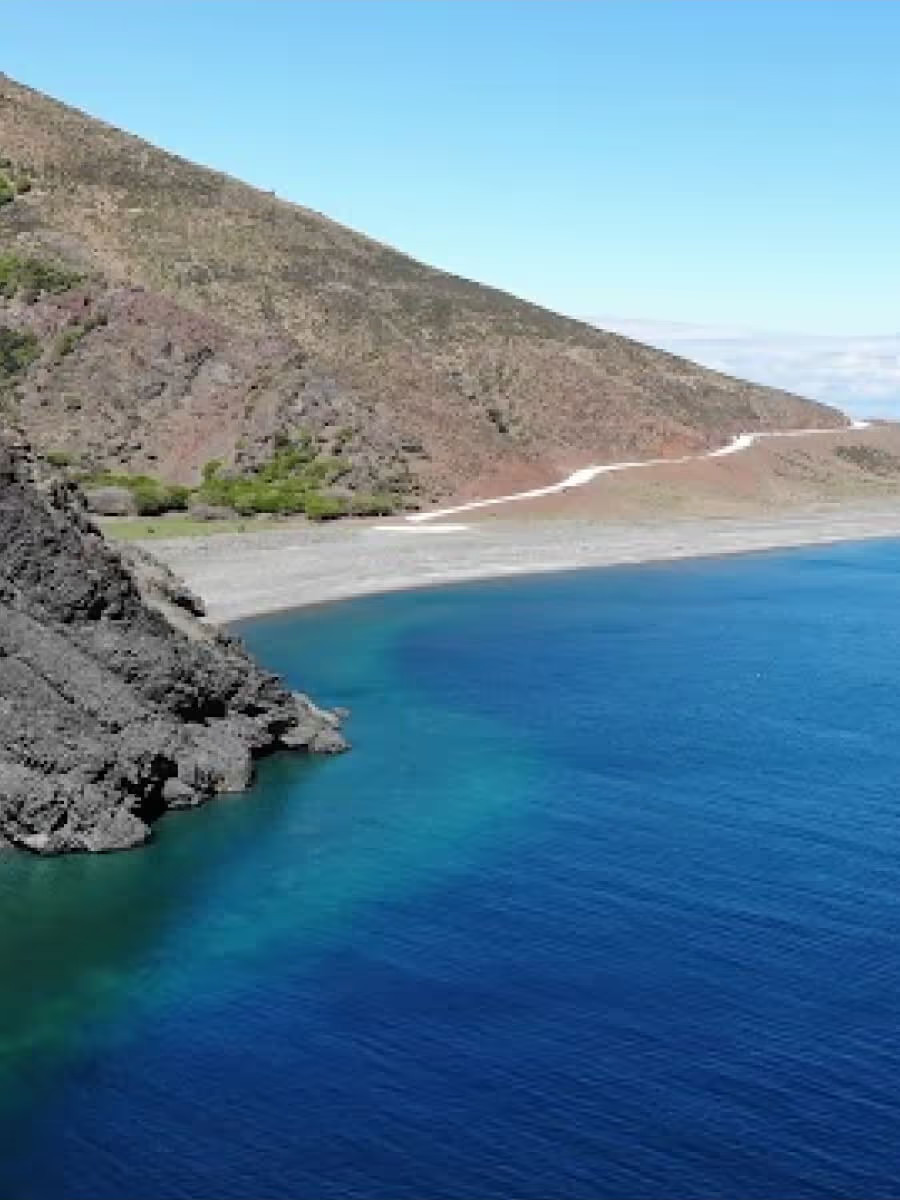
Kipos Beach, at the remote eastern end of the island, is about as dark as Samothraki gets. Open sea to the east and south, no settlement for miles, and an unobstructed horizon in the direction the Milky Way rises. The drive is rough and long — which is exactly why nobody is there at night.
2. The higher ground above Potamia
Elevation lifts you above any coastal haze and widens the horizon in every direction. The country above Potamia, on the island's quiet southern flank, combines height, distance from villages, and a road you can actually drive after dark.
3. Pachia Ammos and the south coast
Pachia Ammos faces open water on the least developed side of the island. Wide, sandy, and easy to lie down on — which matters more than it sounds.
4. The slopes of Mount Saos
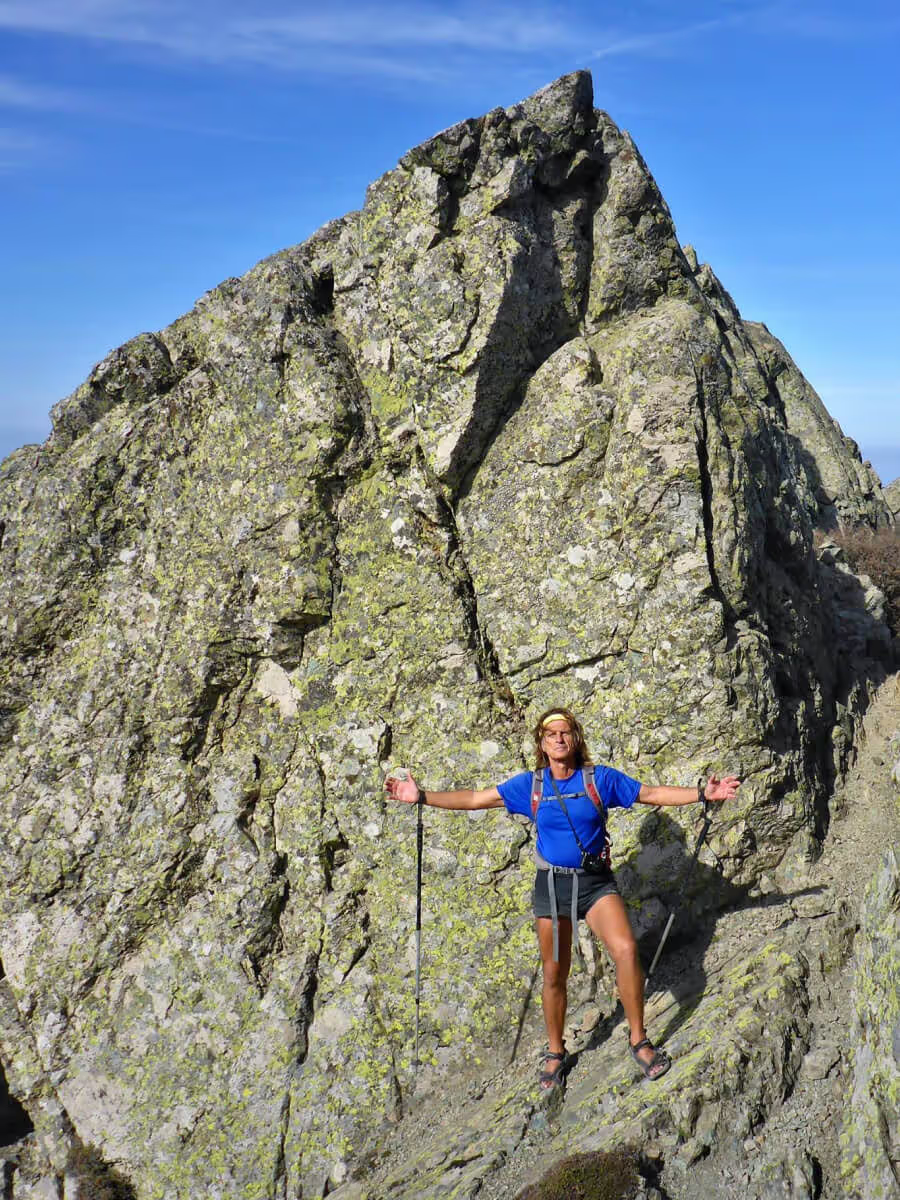
Mount Saos offers the highest, clearest air on the island. The lower slopes and trailheads are the practical choice — the summit is a serious six-hour climb and absolutely not one to attempt in the dark.
5. Anywhere inland, away from the villages
Honestly, most of Samothraki works. Drive ten minutes out of Kamariotissa or Therma, switch the headlights off, and wait.
When to Go
Late August to October is the best window of the year. The air is at its driest and most transparent, the summer haze has cleared, and the nights are lengthening — several hours of full darkness without winter weather.
High summer works well on a moonless night, though true darkness arrives late and the nights are short. The August Perseids remain the most reliable meteor shower of the year, and Samothraki is an exceptional place to watch them.
Winter brings the longest nights and often the sharpest air, but also cloud — the peak spends much of the colder months wrapped in it.
Whatever the month, the moon matters more than the season. A full moon washes out the Milky Way anywhere on earth, Samothraki included. Check the lunar calendar before you book and aim for the week around the new moon.
Where to Stay for Dark Skies
Any accommodation outside the villages will give you a good sky. One place is built around it.
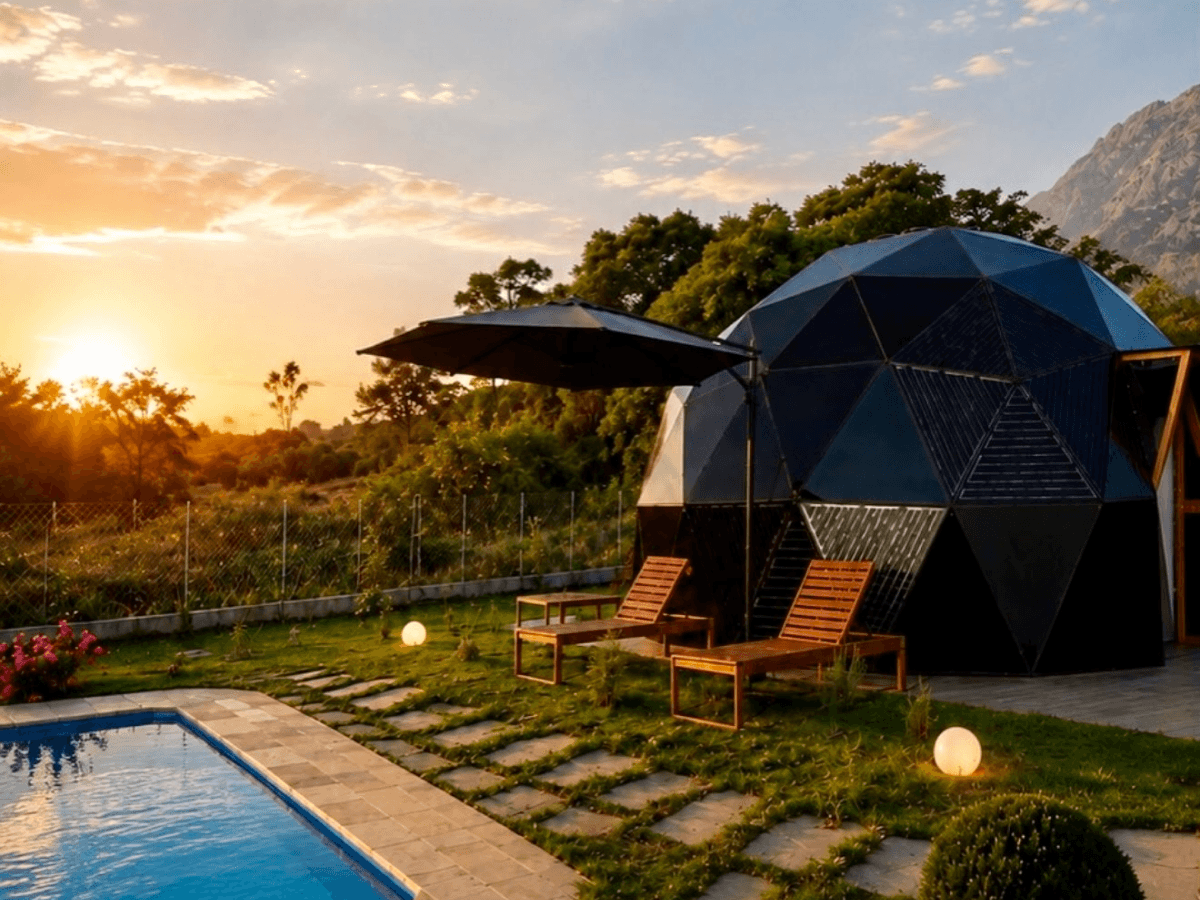
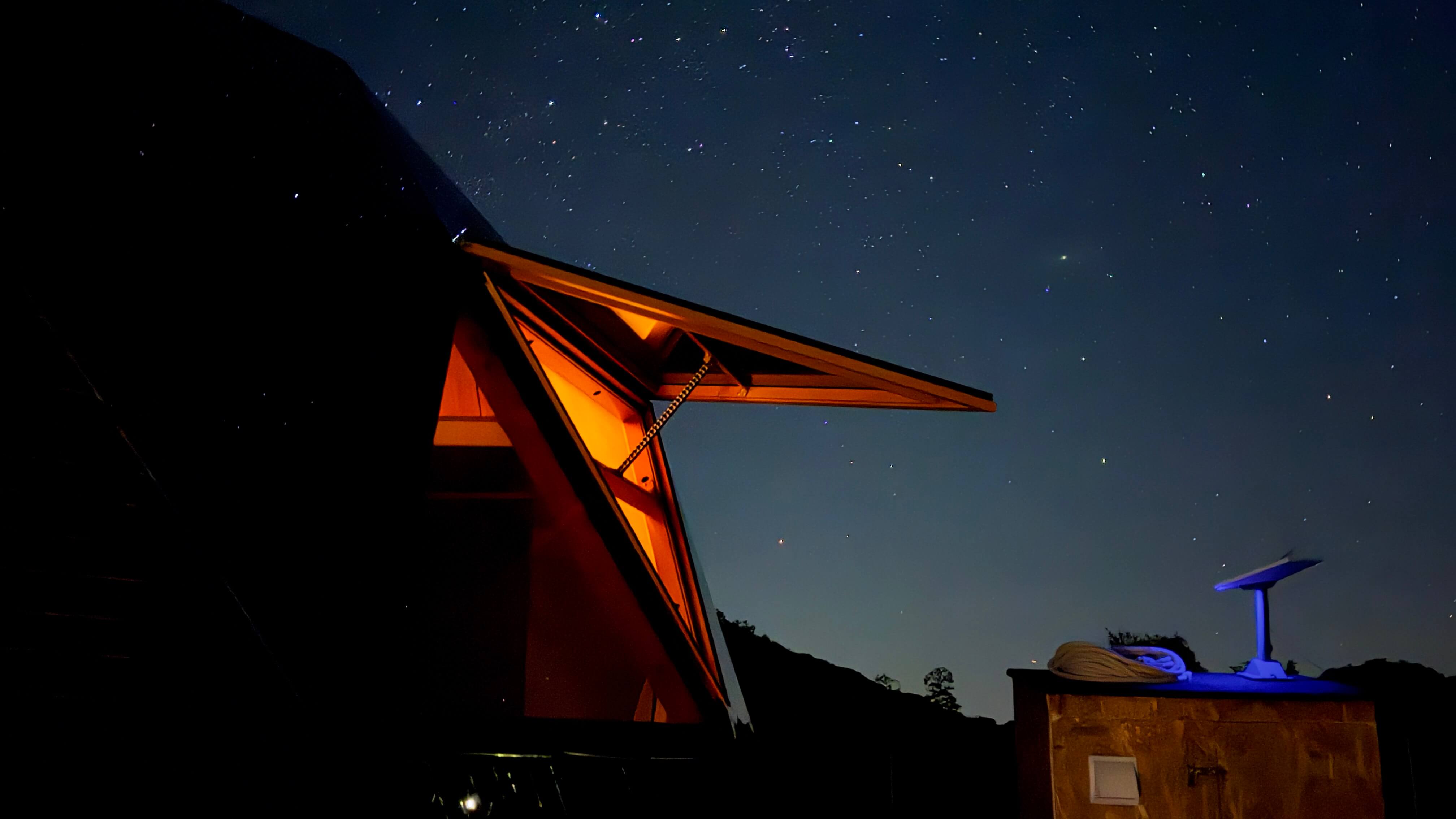
Solar Dome Retreat, on private land above Potamia, is a six-metre geodesic glass dome — almost fully glazed, with a roof window that opens directly onto the sky. Guests watch the stars from bed without stepping outside. It runs entirely off-grid on solar power, which carries an incidental benefit for stargazers: there is no mains lighting anywhere on the property to spoil your dark adaptation, and no neighbours to switch a floodlight on. For anyone coming to Samothraki specifically for the sky, it is the most direct way to spend a night under it.
Camping is the other classic option. Free camping at Platia near Therma has been a fixture of the island's alternative summer for decades. Varades Municipal Camping sits by the beach with more facilities.
Practical Tips for a Good Night
- Give your eyes twenty minutes. Full dark adaptation takes twenty to thirty minutes. Most people give up after five and decide the sky is ordinary.
- Kill every white light. One phone screen resets everyone's night vision. Use a red torch or red-filter mode.
- Bring layers. Even in August the island cools sharply after dark, especially at altitude or near water.
- Lie down. A mat or blanket beats standing with your neck craned. It changes the whole experience.
- Check the moon phase first. The single most important variable, and the one most people forget.
- Binoculars beat a telescope for a casual night. Ordinary 10x50s show Jupiter's moons and resolve star clusters into individual stars.
Common Questions
Can you see the Milky Way from Samothraki?
Yes — with the naked eye, on any clear moonless night, from almost anywhere outside the villages. Samothraki has one of the darkest skies in the Aegean.
What is the best month for stargazing in Samothraki?
Late August through October. The air is driest and most transparent, and the nights are long enough for several hours of full darkness.
Where is the darkest place on the island?
Kipos Beach, at the remote eastern end, has the darkest horizon and an open sea view. The high ground above Potamia and the south coast beaches are also excellent.
Do I need any equipment?
No. The naked eye is enough to see the Milky Way. A pair of 10x50 binoculars adds a great deal for little cost.
Does the moon affect stargazing?
Considerably. A bright moon washes out the Milky Way completely. Plan around the new moon if dark skies are your reason for visiting.
Can you stargaze from your accommodation?
At most places you can simply step outside. At Solar Dome Retreat above Potamia the dome is glazed and has an opening roof window, so the sky is visible from inside.
Keeping It Dark
Dark skies are not permanent. They disappear quietly, one outdoor floodlight at a time, and they are almost never recovered once lost. Samothraki still has something most of Europe has already given away.
If you visit: keep outdoor lighting low and pointed downward, close curtains at night, and don't leave lights burning on empty terraces. It costs nothing, and it is the difference between an island with a sky worth travelling for and one without.
Pair it with
Our picks to combine with Stargazing in Samothraki.